6063 vs 6061 Aluminum Profiles: Choosing the Right Alloy for Your Application
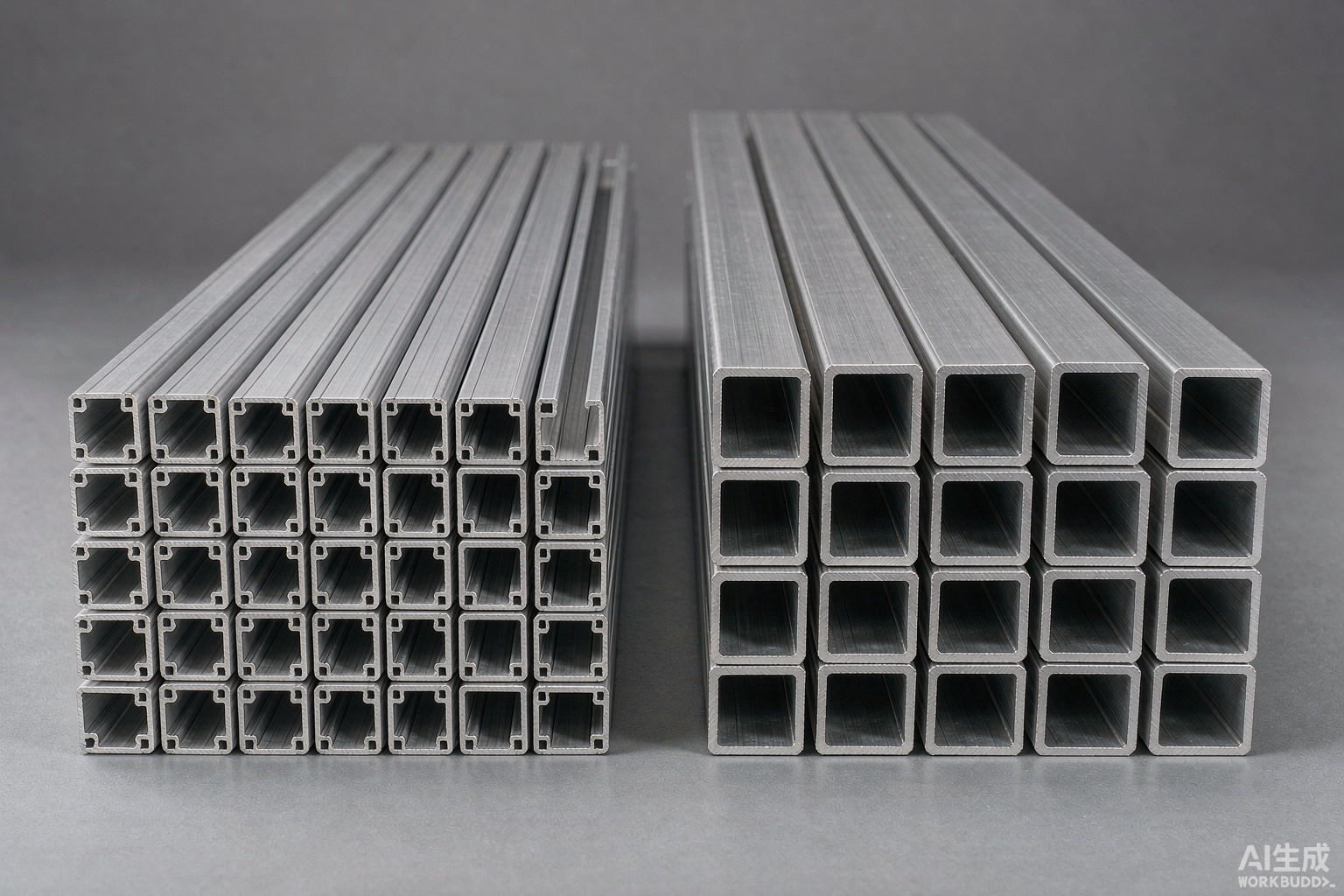
6063 and 6061 are the two most specified alloys in aluminum profile extrusion, and choosing between them shapes cost, appearance, and structural performance of the finished product. Neither is simply “better”—they optimize for different priorities. Here is a practical comparison based on how each alloy behaves in real projects.
6063: The Architectural and Finishing Alloy
6063 is a heat-treatable alloy tuned for the extrusion process itself. It flows through the die with low pressure, which allows thin walls, intricate hollow sections, and sharp detail that stiffer alloys cannot hold. It also responds beautifully to finishing: after anodizing, 6063 develops a smooth, uniform, bright surface, and it accepts powder coating equally well. That combination—complex shapes plus premium finish—explains why 6063 dominates window and door frames, curtain wall systems, heat sinks, LED housings, and furniture profiles. Its natural corrosion resistance suits both indoor and weather-exposed outdoor use.
6061: The Structural Workhorse
6061 is the stronger sibling. In the T6 temper it delivers roughly double the yield strength of 6063-T5, which matters wherever profiles carry real structural load: machine bases, brackets, truck bodies, bridges, and equipment frames subject to impact or vibration. It machines far more aggressively than 6063—drilling, milling, and turning at high speeds with good chip control—so parts that need heavy CNC work after extrusion are usually specified in 6061. It welds predictably, and its properties can be tuned through heat treatment when a project needs a specific strength-machinability balance.
Side-by-Side Summary
Extrudability and shape complexity: 6063 wins—complex, thin-walled, tight-tolerance sections are its home ground.
Surface finish after anodizing: 6063 wins for decorative, uniform appearance.
Mechanical strength: 6061 wins clearly, especially in T6 temper.
CNC machinability: 6061 wins for parts milled or drilled after extrusion.
Corrosion resistance: both perform well outdoors; 6063 has a slight edge in architectural environments.
Typical uses: 6063 for doors, windows, curtain walls, heat sinks, and consumer profiles; 6061 for structural frames, machinery parts, transport components, and high-load assemblies.
How to Decide
Use three questions. First, does the profile carry structural load beyond simple self-support? If yes, start with 6061. Second, is the surface decorative or does the shape involve thin, intricate walls? If yes, start with 6063. Third, will the profile be heavily machined after extrusion? If yes, 6061. Many products legitimately use both—for example, a 6061 machine base fitted with 6063 guards and covers.
If your project sits in the grey zone, send us the drawing and the load case. Our engineers will recommend the alloy and temper that meets your requirements at the lowest cost—see our extruded profile range or request a material consultation via the contact page.